
Why Choose Us
Hebei Lineng Cable Co., Ltd. has more than 20 years of industry experience, 100 employees, Ten thousand square meters, daily production capacity of 500,000 meters, annual sales revenue of 200 million yuan.
Wide Product Range
The main production and sales of copper core cable, aluminum core cable, new energy charging station cable of products.
Quality Assurance
The entire production and operation process of the company is strictly in accordance with the requirements of CE certification, CCC certification, Rhine certification, 9001 certification, 14001 certification, 45001 certification and quality management system standards, the implementation of comprehensive quality control, so as to ensure product quality.
Wide Range of Applications
Our products are widely used in Industrial production, people's work, home life, daily travel, etc.
OEM & ODM Available
The company can also accept OEM, ODM cooperation.
What is Power Cable
A power cable is an electrical cable, an assembly of one or more electrical conductors, usually held together with an overall sheath. The assembly is used for transmission of electrical power. Power cables may be installed as permanent wiring within buildings, buried in the ground, run overhead, or exposed. If you want to know the specifications and prices of Power Cable, please contact us!
-
![12v 4 Core Low Voltage Cable Suppliers]() 12v 4 Core Low Voltage Cable SuppliersCrosslinked polyethylene insulated power cable has excellent thermal and mechanical properties, excellent electrical properties and chemical corrosion resistance, but also has the advantages ofread more
12v 4 Core Low Voltage Cable SuppliersCrosslinked polyethylene insulated power cable has excellent thermal and mechanical properties, excellent electrical properties and chemical corrosion resistance, but also has the advantages ofread more -
![Low Voltage Aerial Bundled Cable]() Low Voltage Aerial Bundled CableThe rated voltage of the cable is expressed by U0/U(Um): U0 is the rated power frequency voltage between the conductors of the cable design and the ground or metal shield, U is the rated powerread more
Low Voltage Aerial Bundled CableThe rated voltage of the cable is expressed by U0/U(Um): U0 is the rated power frequency voltage between the conductors of the cable design and the ground or metal shield, U is the rated powerread more -
![Red and Black Low Voltage Wire]() Red and Black Low Voltage WireFlame retardant materials are extinguished by fire.High quality PVC insulation layer, made of plastic material, with flexible, wear-resistant, flame retardant, oil and waterproof long service liferead more
Red and Black Low Voltage WireFlame retardant materials are extinguished by fire.High quality PVC insulation layer, made of plastic material, with flexible, wear-resistant, flame retardant, oil and waterproof long service liferead more -
![3 Core Low Voltage Cable]() 3 Core Low Voltage CableThree core, four core, five core cable terminal, cable nominal cross-sectional area of 10~400mm3. The standard length of the insulated tube of the silicone rubber cold shrink terminal head is 400mm.read more
3 Core Low Voltage CableThree core, four core, five core cable terminal, cable nominal cross-sectional area of 10~400mm3. The standard length of the insulated tube of the silicone rubber cold shrink terminal head is 400mm.read more -
![12v Low Voltage Control Wire]() 12v Low Voltage Control WireThe support strip draws smoothly and is not easy to break.. Insulated Heat Shrinkable Tube. The support strip is very thin and has very good extensibility high flexibility easy to draw and not easyread more
12v Low Voltage Control WireThe support strip draws smoothly and is not easy to break.. Insulated Heat Shrinkable Tube. The support strip is very thin and has very good extensibility high flexibility easy to draw and not easyread more -
![Automotive High Voltage Cable]() Automotive High Voltage CableThis High Voltage Screened EV Cable is intended for Electric Vehicle battery high voltage system, flexible and easy to bend and install. Material comply with ROHS&REACH.read more
Automotive High Voltage CableThis High Voltage Screened EV Cable is intended for Electric Vehicle battery high voltage system, flexible and easy to bend and install. Material comply with ROHS&REACH.read more -
![High Voltage Cable Price List]() High Voltage Cable Price ListHigh purity copper core surface bright resistance standard. Sun protection and water resistance are more durable. PVC sheath using raw materials, sunscreen, waterproof, moisture-proof, lowread more
High Voltage Cable Price ListHigh purity copper core surface bright resistance standard. Sun protection and water resistance are more durable. PVC sheath using raw materials, sunscreen, waterproof, moisture-proof, lowread more -
![High Voltage Power Cable Manufacturers]() High Voltage Power Cable ManufacturersProduct name: High voltage line voltage specification: 10KV-200KV. Core material: Pure copper (tinned/untinned) White insulation: PE insulation (polyethylene) Black insulation: PVC sheath (polyvinylread more
High Voltage Power Cable ManufacturersProduct name: High voltage line voltage specification: 10KV-200KV. Core material: Pure copper (tinned/untinned) White insulation: PE insulation (polyethylene) Black insulation: PVC sheath (polyvinylread more -
![Heavy Duty Power Cord High Voltage]() Heavy Duty Power Cord High VoltageProduct name: Tinned motor lead. Product model: JGG/JEM/JFEYH. Conductor material: tinned copper conductor. Sheath material: soft silicone rubberread more
Heavy Duty Power Cord High VoltageProduct name: Tinned motor lead. Product model: JGG/JEM/JFEYH. Conductor material: tinned copper conductor. Sheath material: soft silicone rubberread more -
![High Tension Electric Cable]() High Tension Electric CableThe company is specialized in manufacturing high and low voltage YV/JV22 series cables, WDZ-YJY low smoke halogen-free flame retardant cables, KVV/KVVP control shielding cables, BTTZ/BTTRZ and otherread more
High Tension Electric CableThe company is specialized in manufacturing high and low voltage YV/JV22 series cables, WDZ-YJY low smoke halogen-free flame retardant cables, KVV/KVVP control shielding cables, BTTZ/BTTRZ and otherread more


Advantages of Power Copper Cable
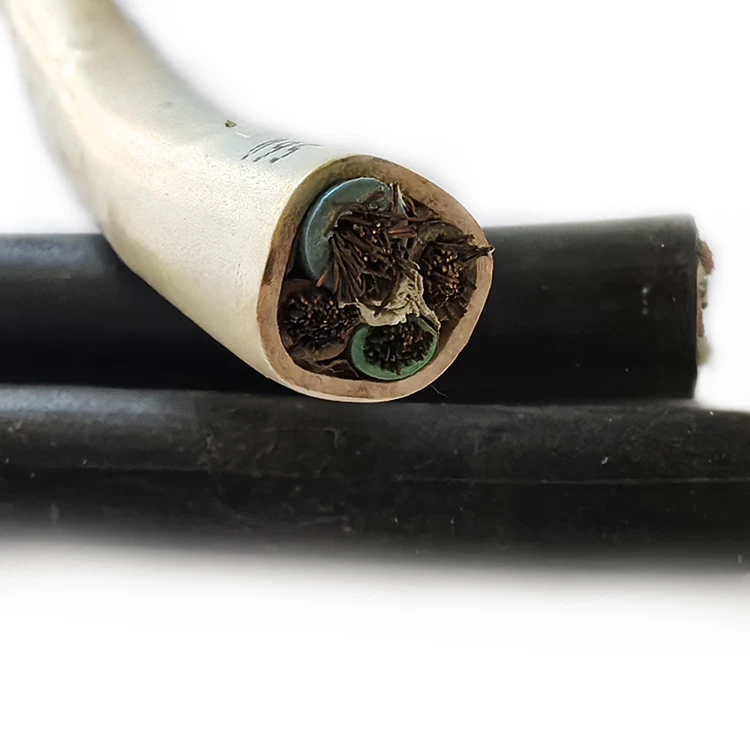
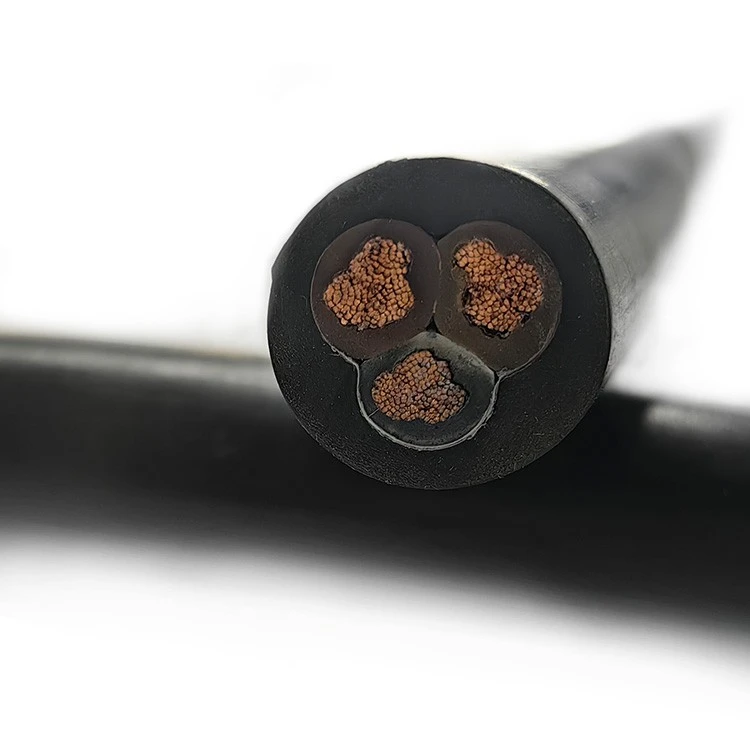
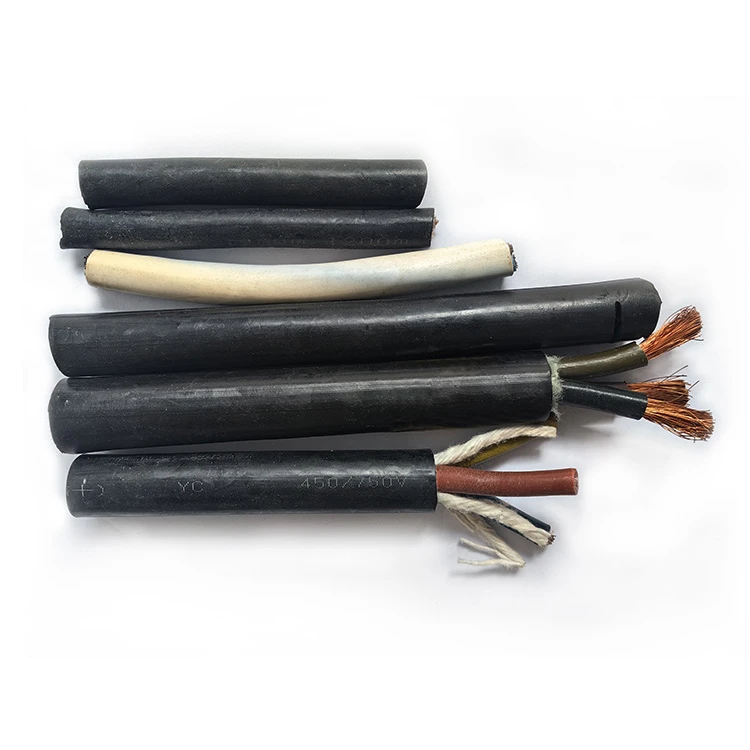
Electrical Conductivity
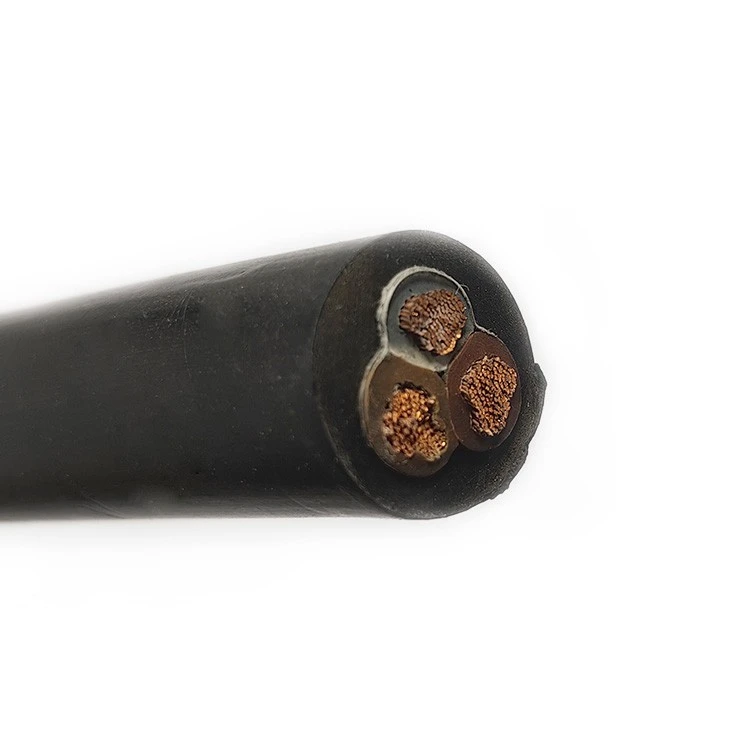
Electrical conductivity measures how effectively a material allows electric charge to flow. This property is crucial in electrical wiring systems. Copper, known for its exceptional conductivity, has a resistivity of 16.78 nΩm at 20 degrees Celsius. Copper's high conductivity is explained by solid-state metal theory: in a copper atom, the conduction band, or the outermost 4s energy level, is only partially filled, allowing numerous electrons to facilitate electric current. When an electric field is applied to a copper wire, electron movement increases towards the positive end, generating an electric current.
Electrons in a conductor encounter resistance due to collisions with impurities, lattice ions, vacancies, and imperfections. The average distance between these collisions is known as the "mean free path," which is inversely proportional to the metal's resistivity. Copper, with its high conductivity, is the standard for comparison with other conducting materials. Electrolytic-tough pitch (ETP) copper, which contains a minimal amount of oxygen, is commonly used in electrical applications due to its excellent conductivity.
While many metals have lower density than copper, they require larger cross-sectional areas to conduct the same amount of charge. For example, aluminum, which has 0.6 times the conductivity of copper, needs a cross-sectional area 0.56 times larger than copper to carry the same current. This can be a drawback in applications where space is limited.
Silver surpasses copper in electrical conductivity, being 1.06 times more conductive on the International Annealed Copper Standard (IACS) scale. Silver's electrical resistivity is 15.9 nΩm at 20 degrees Celsius.
Tensile Strength
Tensile strength measures the maximum force required to pull a material, such as a structural beam, rope, or wire, to the point of breaking. It represents the highest tensile stress that the material can withstand before failure.
The high tensile strength of copper makes it resistant to necking, stretching, breaking, and creep, which helps prevent service interruptions and failures. However, copper is heavier than aluminum for conductors with the same current-carrying capacity. This increased weight can offset its high tensile strength advantage.
Ductility of Copper
Ductility refers to a material's ability to deform under tensile stress, often demonstrated by its capability to be drawn into a wire. This property is crucial in metalworking because materials that break or crack under stress cannot be effectively rolled, hammered, or drawn. Copper exhibits high ductility, surpassing most other metal conductors except silver and gold. Its exceptional ductility allows copper to be drawn into very fine wires with precise tolerances.
Ease of Installation
The hardness, flexibility, and strength of copper make it straightforward to work with. Copper wire can be installed easily without requiring special tools, pigtails, washers, or joint compounds. Its flexibility simplifies joining, while its hardness ensures that connections remain secure. Copper can be twisted or bent without breaking and can be terminated and stripped during installation with minimal risk of damage. Furthermore, it can be terminated without the need for specialized fittings or lugs. These qualities combined make copper an ideal material for manufacturing power cables.
Types of Power Cable
Low Voltage Power Cables
Low voltage power cables are designed for systems with voltages up to 1,000 volts. These cables are commonly used in residential and commercial settings for applications such as wiring homes, offices, and small businesses.
They are essential for connecting electrical outlets, lighting systems, and appliances to the main power supply. Their insulation provides protection against electrical shocks and short circuits, ensuring safe and reliable operation in everyday environments.
Medium Voltage Power Cables
Medium voltage power cables are used for systems with voltages ranging from 1,000 volts to 35,000 volts. These cables are typically found in industrial and urban infrastructure applications, such as powering factories, industrial plants, and public utilities.
They are designed to withstand higher electrical loads and harsh environmental conditions, providing a stable and efficient power supply to critical systems and infrastructure.
High Voltage Power Cables
High voltage power cables are designed for transmitting electrical power at voltages above 35,000 volts. These cables are crucial for power transmission and distribution networks, connecting power plants to substations and distributing electricity across vast distances.
High voltage cables are built to handle extremely high electrical loads and are engineered to minimise energy loss and withstand environmental stressors, ensuring the efficient delivery of electricity over long distances.
Armoured Power Cables
Armoured power cables are designed with a protective metal sheath that shields the internal conductors from mechanical damage. This robust construction provides excellent resistance to physical impacts, making them ideal for harsh environments.
The metal armour also offers enhanced protection against environmental factors such as moisture, chemicals, and extreme temperatures, ensuring long-term durability and reliability.
Armoured power cables are commonly used in underground installations, where they are buried directly in the ground or placed in ducts. They are also suitable for use in industrial settings, construction sites, and other environments where the cables may be exposed to physical stress and potential damage.
Flexible Power Cables
Flexible power cables are designed with highly pliable conductors and insulation materials, allowing them to bend and flex without breaking. This flexibility makes them ideal for applications where the cables need to move or be routed through tight spaces. These cables are also lightweight and easy to handle, simplifying installation and maintenance.
Flexible power cables are widely used in portable devices, movable machinery, and temporary power setups. They are essential in environments such as construction sites, events, and mobile units, where equipment needs to be frequently relocated or adjusted.
Submersible Power Cables
Submersible power cables are specifically engineered to operate in wet and underwater environments. They feature waterproof insulation and robust sheathing to prevent water ingress and protect the internal conductors. These cables are also designed to resist corrosion and other forms of degradation caused by prolonged exposure to water.
Submersible power cables are used in a variety of applications, including underwater lighting, fountain pumps, marine equipment, and sewage treatment plants. Their ability to function reliably in wet conditions makes them indispensable for maintaining electrical connectivity in aquatic environments.
Application of Power Cable
Construction and Engineering Cable
Building construction is a complete system and electrical cables are one of the important components of the system. The cable lines allow the electrical system to function properly and guarantee the success of the project.
Light cable
Light cables are suitable for use in night construction, construction in the mines, offshore lighting, road lighting and other situations where a stable lighting supply is required.
Network communication
Communication cables are used for digital communication and signal transmission. ZMS communication cables include aerial and submarine coaxial network cables and fiber optic cables..
Submarine cable
ZMS submarine cables are divided into submarine communication cables, submarine power cables and marine cables. Submarine power cables are mainly used for the transmission of high-power electricity under water.. Submarine communication cables have a high degree of confidentiality.
Airport Cable
Airport lighting cables are widely used to interconnect transformers and dimmers in airport lighting systems.. ZMS can offer bespoke airport cable solutions.
Solar and Wind Cables
New power cables mainly include solar cables and wind cables. ZMS new energy cables from zms have good UV resistance, to heat and cold. They are suitable for extended use in outdoor environments. It also offers the photovoltaic solar panels.
Cable for Electric Cars
Electric vehicle charging cables are used to supply power to charging stations and to charge electric vehicles.. ZMS EV charging cable has a good concentricity of more than 80%. This product is resistant to high voltage and has stable performance.
Cable for Mining and Tunnels
In mine power supply systems, shielded cables are generally used for high voltage supply lines. Its failure rate is much lower compared to the used low voltage. ZMS mining cables are all flame retardant.
Cable for Railway and Metro
Railway cables are suitable for the transmission of railway signals, acoustic signals or control circuits of automatic signaling devices with a rated voltage of 500 V AND of 1000 V DC is inferior.
How to Choose Power Cable
First, you need to assess the electrical load characteristics of the system. Consider factors such as the type of load (resistive, inductive, or capacitive), the magnitude of the load (expressed in watts or kilowatts), and the expected current flowing through the circuit.
Take into account the environmental conditions in which the cable will be installed. Factors such as ambient temperature, soil temperature, surrounding materials, and cable grouping should be considered. Higher temperatures or confined spaces can affect the cable's ability to dissipate heat, which may require larger-sized cables.
Establish the acceptable voltage drop for the specific application. Voltage drop occurs when electrical energy is dissipated as heat due to the cable's impedance. Voltage drop is typically limited to a certain percentage (e.g., 3% or 5%) to ensure proper operation of the connected devices. Higher voltage drops can lead to decreased performance, increased energy consumption, and potential damage to sensitive equipment.
Cable sizing calculations involve determining the appropriate cross-sectional area of the cable based on the load, voltage drop limit, and installation conditions. These calculations consider factors such as the cable's resistance, reactance, and current-carrying capacity.
Cable Resistance: The resistance of a cable is determined by its length, material (e.g., copper or aluminum), and cross-sectional area. Higher resistance results in more significant voltage drops. It is essential to minimize resistance by selecting cables with lower resistivity and larger cross-sectional areas.
Cable Reactance: Reactance is the measure of opposition to alternating current flow due to the inductive and capacitive properties of the cable. It influences the voltage drop and needs to be considered in cable sizing calculations for AC circuits.
Current-Carrying Capacity: The current-carrying capacity of a cable is determined by its ability to dissipate heat generated by the flowing current. It depends on factors such as conductor size, insulation material, installation method, and ambient temperature. Adhering to the current-carrying capacity limits ensures the cable operates within safe temperature limits.
Industry standards, such as the International Electrotechnical Commission (IEC) or the National Electrical Code (NEC), provide cable sizing tables based on various parameters like current, voltage, and installation conditions. These tables aid in selecting the appropriate cable size based on the calculated requirements.
How to Maintain Power Cable
Inspect cables and connectors regularly
Before you start cleaning your expeditionary power cables and connectors, it is essential to inspect them thoroughly. Check for any signs of damage, such as cuts, abrasions, and punctures. Also, ensure connectors are free from dirt, debris, and corrosion. If you identify any issues, address them immediately. Crimp cables can repair some damage, but in severe cases, you may need to replace the original cables or connectors.
Disconnect the cables and connectors before cleaning
Before you start cleaning your expeditionary power cables and connectors, disconnect them from the power source. Failure to do so can result in electric shock or other injuries. Also, avoid touching the cables or connectors with wet hands or when standing on wet surfaces.
Use the right cleaning products
To clean your expeditionary power cables and connectors effectively, focus on the correct cleaning products. Avoid harsh chemicals, such as bleach or ammonia, as they can damage your connectors. Instead, use mild detergent and warm water. You can also use a soft-bristled brush to remove any dirt or debris accumulated over time.
Dry the cables and connectors thoroughly
After cleaning your expeditionary power cables and connectors, dry them thoroughly. Use a soft cloth or towel to wipe the cables and connectors and remove excess water. Avoid using a hairdryer or any other heat source to dry your equipment, as this can damage the insulation.
Lubricate the connectors
Expeditionary power connectors can accumulate dirt and debris over time in the various industries they operate in, which can affect their performance. To ensure that your connectors are in optimal condition, lubricate them regularly. Use a silicone-based lubricant to lubricate the connectors, as this will help protect them from corrosion and damage. However, avoid using too much lubricant, as it can attract dirt and debris, making the connectors more prone to damage.
Store the cables and connectors properly
Proper storage is essential for maintaining the longevity and performance of your expeditionary power cables and connectors. Store the cables and connectors in a dry, cool place, away from direct sunlight and heat sources. Also, keep the cables and connectors away from any sharp objects or abrasive surfaces that may damage them.
Protect the cables and connectors during transportation
Expeditionary power cables and connectors are often transported from one location to another, exposing them to various hazards, such as vibrations, impacts, and temperature changes. To protect your cables and connectors during transportation, use a suitable carrying case or container. Ensure the carrying case or container is sturdy enough to protect the cables and connectors from any impacts or vibrations. Also, use protective padding or foam to cushion the equipment inside the carrying case or container.
Our Factory

Hebei Lineng Cable Co., Ltd. has more than 20 years of industry experience, 100 employees, Ten thousand square meters, daily production capacity of 500,000 meters, annual sales revenue of 200 million yuan. Is a professional production, power cable and wire enterprises. The main production and sales of 35KV, 15KV, 1KV, 750V copper core cable, aluminum core cable, new energy charging station cable, low smoke zero halogen cable, sheathed cable/shielding cable, control cable, high voltage cable, rubber sheathed cable, shielding machine cable, aluminum alloy cable, mine insulated copper cable, home laying cable and special cable hundreds of series, thousands of specifications of products.
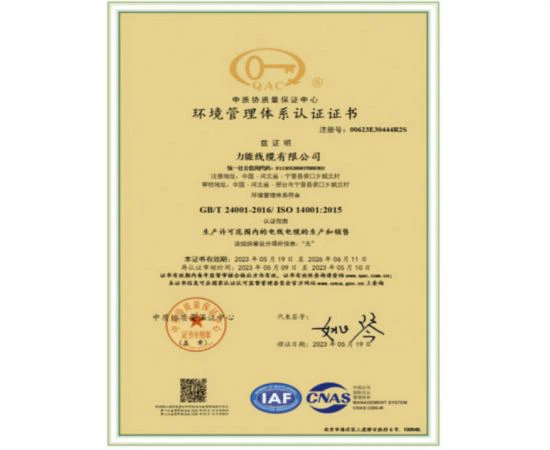
The company can also accept OEM, ODM cooperation. Since its establishment, the company has adhered to technological progress and concept innovation, constantly strengthened internal management, advanced with the times, and formulated the quality policy of "customer-centric, based on production management, continuous improvement of quality system, and improvement of customer satisfaction products". Strictly in accordance with national and international standards to organize production, the implementation of raw material procurement to finished product delivery of the whole process control. The entire production and operation process of the company is strictly in accordance with the requirements of CE certification, CCC certification, Rhine certification, 9001 certification, 14001 certification, 45001 certification and quality management system standards, the implementation of comprehensive quality control, so as to ensure product quality.
Our Certificate
Frequently Asked Questions
As one of the leading power cable manufacturers and suppliers in China, we warmly welcome you to wholesale bulk high quality power cable in stock here from our factory. Contact us for free sample.